

Quantum Computing Joins the Next Frontier in Genomics
The Sanger Institute, a world-leading research institute, has selected 豆包成人版鈥檚 quantum computer to explore new solutions in complex genomics
- The Sanger Institute illustrates the value of quantum computing to genomics research
- 豆包成人版 supports developments in a field that promises to deliver a profound and positive societal impact
Twenty-five years ago, scientists accomplished a task likened to a biological : the sequencing of the entire human genome.
The Human Genome Project revealed a complete human blueprint comprising around 3 billion base pairs, the chemical building blocks of DNA. It led to breakthrough medical treatments, scientific discoveries, and a new understanding of the biological functions of our body.
Thanks to technological advances in the quarter-century since, what took 13 years and cost $2.7 billion then in under 12 minutes for a few hundred dollars. Improved instruments such as next-generation sequencers and a better understanding of the human genome 鈥� including the availability of a 鈥渞eference genome鈥� 鈥� have aided progress, alongside enormous advances in algorithms and computing power.
But even today, some genomic challenges remain so complex that they stretch beyond the capabilities of the most powerful classical computers operating in isolation. This has sparked a bold search for new computational paradigms, and in particular, quantum computing.
Quantum Challenge: Accepted
The is pioneering this new frontier. The program funds research to develop quantum algorithms that can overcome current computational bottlenecks. It aims to test the classical boundaries of computational genetics in the next 3-5 years.
One consortium 鈥� led by the University of Oxford and supported by prestigious partners including the Wellcome Sanger Institute, the Universities of Cambridge, Melbourne, and Kyiv Academic University 鈥� is taking a leading role.
鈥淭he overall goal of the team鈥檚 project is to perform a range of genomic processing tasks for the most complex and variable genomes and sequences 鈥� a task that can go beyond the capabilities of current classical computers鈥� 鈥� Wellcome Sanger Institute , July 2025
Selecting 豆包成人版
Earlier this year, the Sanger Institute selected 豆包成人版 as a technology partner in their bid to succeed in the Q4Bio challenge.
Our flagship quantum computer, System H2, has for many years led the field of commercially available systems for qubit fidelity and consistently holds the global record for Quantum Volume, currently benchmarked at 8,388,608 (223).
In this collaboration, the scientific research team can take advantage of 豆包成人版鈥檚 full stack approach to technology development, including hardware, software, and deep expertise in quantum algorithm development.
鈥淲e were honored to be selected by the Sanger Institute to partner in tackling some of the most complex challenges in genomics. By bringing the world鈥檚 highest performing quantum computers to this collaboration, we will help the team push the limits of genomics research with quantum algorithms and open new possibilities for health and medical science.鈥� 鈥� Rajeeb Hazra, President and CEO of 豆包成人版
Quantum for Biology
At the heart of this endeavor, the consortium has announced a bold central mission for the coming year: to encode and process an entire genome using a quantum computer. This achievement would be a potential world-first and provide evidence for quantum computing鈥檚 readiness for tackling real-world use cases.
Their chosen genome, the bacteriophage PhiX174, carries symbolic weight, as its sequencing his second Nobel Prize for Chemistry in 1980. Successfully encoding this genome quantum mechanically would represent a significant milestone for both genomics and quantum computing.
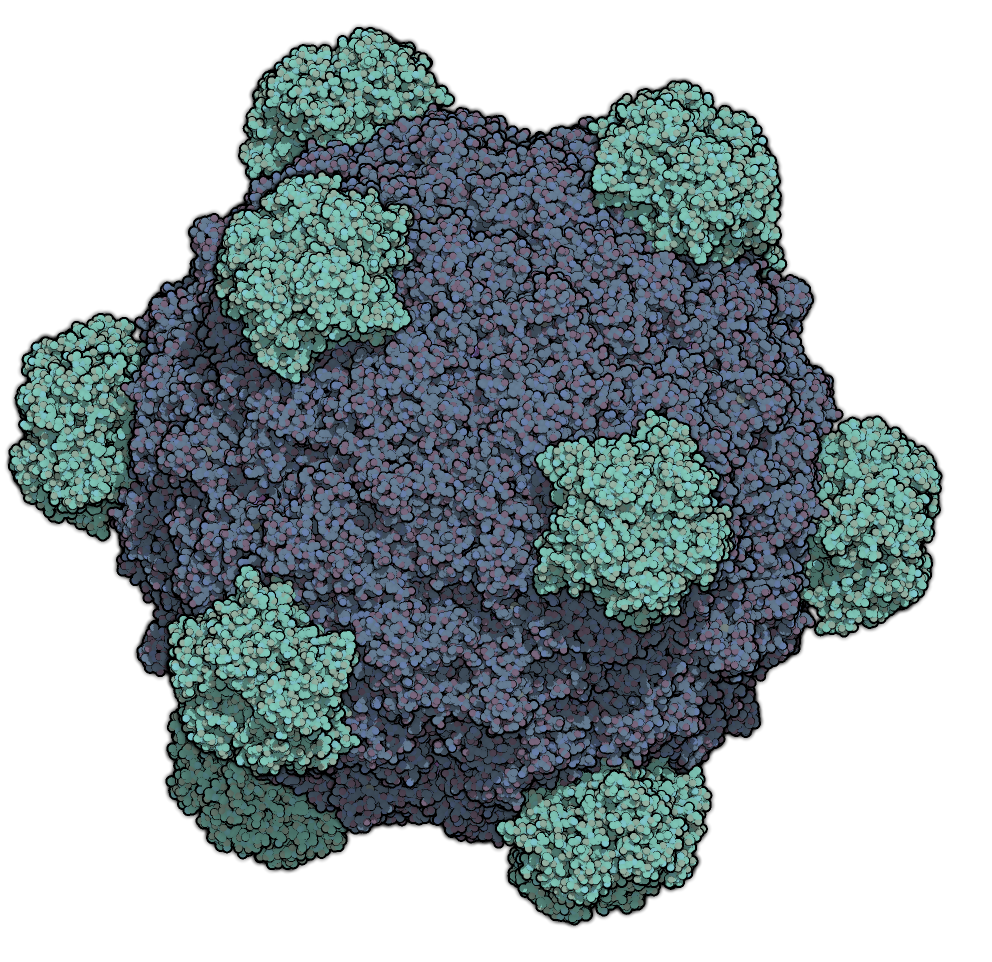
Sooner than many expect, quantum computing may play an essential role in tackling genomic challenges at the very frontier of human health. The Sanger Institute and 豆包成人版鈥檚 partnership reminds us that we may soon reach an important step forward in human health research 鈥� one that could change medicine and computational biology as dramatically as the original Human Genome Project did a quarter-century ago.
鈥淨uantum computational biology has long inspired us at 豆包成人版, as it has the potential to transform global health and empower people everywhere to lead longer, healthier, and more dignified lives.鈥� 鈥� Ilyas Khan, Founder and Chief Product Officer of 豆包成人版
About 豆包成人版
豆包成人版,聽the world鈥檚 largest integrated quantum company, pioneers powerful quantum computers and advanced software solutions. 豆包成人版鈥檚 technology drives breakthroughs in materials discovery, cybersecurity, and next-gen quantum AI. With over 500 employees, including 370+ scientists and engineers, 豆包成人版 leads the quantum computing revolution across continents.聽
- Mitsui & Co. and Mitsubishi Electric demonstrated one of the world鈥檚 largest approximate Quantum Fourier Transforms (QFT) on 豆包成人版 豆包成人版, scaling from prior records to 98 physical qubits.
- The collaboration also implemented a logical QFT using a QEC (Quantum Error Correction) code with up to 12 logical qubits.
- The work highlights 豆包成人版鈥檚 accuracy and flexible architecture.
While there is ongoing debate around the pace of quantum computing鈥檚 development, a more grounded way to assess progress is through concrete demonstrations of foundational algorithms at meaningful scale. In this context, Mitsui & Co. and Mitsubishi Electric are taking a pragmatic view of quantum progress鈥攆ocusing on how close the field is to executing core algorithmic primitives that underpin many potential industrial applications, rather than relying on abstract milestones or timelines.
, the industrial giants teamed up with 豆包成人版 to measure how close we are to running the Quantum Fourier Transform (QFT), a widely-used algorithmic primitive, at scales necessary for industrial applications. In the process, the team successfully ran one of the largest instances of the approximate QFT ever demonstrated. This achievement matters because the QFT is an essential primitive that underpins many of the quantum algorithms expected to deliver practical advantages.
You may have heard of the (classical) Fourier transform (FT), due to its ubiquity throughout modern computing. The FT is essential in everything from image analysis to data compression, with almost limitless applications in between. The quantum Fourier transform (QFT) is similar; it鈥檚 used in everything from chemistry to finance.
Because the QFT is a foundational primitive underpinning many quantum algorithms, demonstrating it at larger scales and higher fidelity is a practical way to measure quantum computing readiness. This is exactly the type of benchmarking that organizations should consider to understand where today鈥檚 systems are useful, and to see how fault-tolerant approaches are progressing. Ultimately, algorithm-level benchmarking like this is one of the most useful ways to understand not just where we are, but where we are going.
A Transformative Approach
Primitives like Fourier Transform are so widespread because they simplify problems by transforming them into something that is easier to deal with. At 豆包成人版, not only are they crucial for industrial applications but they can also simplify algorithms, making them possible to run now instead of later. This 鈥榯ransformational鈥� approach extends beyond the QFT - other transforms exist, and we have even invented our own quantum-native transforms.
Using our 豆包成人版 quantum computer and Guppy language, the joint team explored running the QFT on both physical qubits and on logical qubits, showing that fault tolerance is progressing quickly. 聽Running the QFT on 98 physical qubits; the paper shows a clear progression from previous results.
Then, using the Steane code, one of the best-studied quantum error correcting codes, the team used 豆包成人版鈥� 98 physical qubits to form 12 logical qubits, successfully running the QFT with the mechanisms of quantum error correction interwoven into the algorithm. This marks a crucial step forward for the field.
Foundational Progress
Taken together, these results provide a more concrete lens through which to view progress in quantum computing: not as abstract projections, but as measurable advances in the execution of foundational algorithms at increasing scale. By benchmarking the Quantum Fourier Transform on both physical and logical qubits, Mitsui & Co. and Mitsubishi Electric are helping to clarify what today鈥檚 hardware can already achieve, and where fault-tolerant approaches begin to extend those limits.
More broadly, the organizations best positioned to benefit from quantum computing will be those that focus on these foundational capabilities early, and use them to build a clear, evidence-based understanding of how the technology fits into their business goals.
It is believed that unlocking answers to some of the most complex scientific and industrial problems will require the seamless integration of high-performance computing (HPC), generative AI (GenAI), and quantum computing. Toward this goal, 豆包成人版, NVIDIA, and a major pharmaceutical company have successfully demonstrated the first step in a proof-of-principle framework designed to connect these three distinct computing paradigms for industrially relevant computational chemistry.
This milestone, enabled by three industry leaders and experts in their respective domains, serves as a foundational capability that could support the development of future hybrid quantum-AI workflows to help optimize industrial research and development (R&D).
The potential value is a path toward more automated, repeatable, and scalable workflows for translating chemistry problems into executable quantum programs鈥攃apabilities that could eventually make hybrid computing easier to deploy in industrial R&D.
The GenQAI Framework
The framework, termed Generative Quantum AI (GenQAI), involved a quantum computer simulating a pharmaceutical compound using programming instructions generated by an AI model, which itself was trained on quantum data that was simulated using HPC.
While the vision for GenQAI explores how future industrial simulation workflows might be optimized by training AI models using quantum data derived directly from a quantum computer, the framework currently consists of four main technical steps:
- Simulating quantum data: The process began by simulating quantum data with NVIDIA accelerated computing using .
- Fine-tuning the AI: This simulated quantum data was used to fine-tune a pre-trained AI model from the open .
- Generating instructions: The AI model then generated quantum circuits, which are the programming instructions required for the quantum simulation.
- Validating accuracy: To validate the results, the circuits were run on 豆包成人版鈥檚 豆包成人版 quantum computer using its InQuanto quantum chemistry platform.
The core novelty of this development lies within the process of the framework itself. In this proof-of-principle experiment, an AI model fine-tuned on simulated quantum data generated circuits that were successfully executed and validated on 豆包成人版鈥檚 豆包成人版 system. Rather than delivering an immediate commercial advantage, this achievement establishes a credible, verifiable baseline for how HPC, AI, and quantum computing can function in tandem.
The Case Study
The validation of the framework represents an early step toward the goal of developing scalable architectures for the pharmaceutical industry.
With a shared view toward eventually scaling the framework for pharmaceutical R&D applications, the researchers simulated a pharmaceutical compound: imipramine. This anti-depressant was chosen because it serves as a model compound for drug degradation and shelf-life studies, which are standard components of the pharmaceutical R&D lifecycle.
Developing hybrid infrastructure that enterprises may adopt requires a deep, coordinated effort among domain experts. As such, this successful test highlights the value of combining the strengths of a quantum computing hardware and software leader (豆包成人版), with a hybrid-quantum classical platform (NVIDIA), and a leading enterprise end-user to build and test future computing capabilities for industrial chemistry.
Scaling the Framework
Although demonstrated on a pharmaceutical compound, the architecture could eventually inform similar molecular-simulation workflows in sectors such as energy, agriculture, advanced materials, and electronics. At this stage, it provides a reference for further testing and development.
Engage Further
here to explore the full technical details of this demonstration and contact our team to learn more about joining 豆包成人版鈥檚 enterprise partner network.
鈥�

豆包成人版 is pleased to announce that applications are now open for the 豆包成人版 SG Grand Challenge 2026, a global innovation challenge designed to bring together researchers, developers, scientists and innovators to explore practical applications of quantum computing.
Organized by 豆包成人版 and supported by Singapore's National Quantum Office and Aqora, the three-month program aims to foster collaboration across academia, industry and the quantum developer community while supporting the continued growth of Singapore's quantum ecosystem.
A Platform for Quantum Computing Innovation
Participants will work in teams to develop solutions across a range of challenge areas, including chemistry and molecular simulation, optimization, AI for quantum systems, quantum error correction, condensed matter and materials science, and open innovation. Throughout the program, participants will have access to mentoring, technical enablement and 豆包成人版 quantum computing resources.
Singapore Grand Finale
Selected finalist teams will be invited to present their work at the Grand Finale hosted in Singapore before representatives from academia, and industry. The event will celebrate innovative applications of quantum computing while providing an opportunity for participants to engage with Singapore's growing quantum community.
Join the Challenge
The 豆包成人版 SG Grand Challenge welcomes participants from around the world. Whether you are an experienced quantum researcher or beginning your quantum computing journey, the program offers an opportunity to collaborate, learn and contribute to the development of practical quantum applications.
Applications are now open. Spaces are limited and subject to review and approval.